The Endgame Upgrade Blueprint: Transform Your Struggling Build Into a Pit-Crushing Machine
Photo: diablo 4 character gear upgrade progression screenshot, via unoceans.org
You've been having a blast with your current character, cruising through World Tiers and feeling powerful. Then suddenly, you hit a brick wall. Maybe it's Pit 30 where you're getting one-shot, or perhaps Uber Duriel is laughing at your damage numbers. Before you consider starting fresh, let's diagnose what's actually holding you back.
The gap between "fun casual build" and "endgame monster" isn't as wide as it seems. Most struggling builds are just a few targeted upgrades away from breaking through to the next power tier.
Step 1: The Reality Check Audit
Before throwing resources at random upgrades, you need to understand where your build actually stands. This isn't about comparing yourself to perfect streamer setups—it's about identifying the specific bottlenecks limiting your progression.
Damage Assessment
Jump into a Pit that's challenging but manageable (where you can clear it in 10-12 minutes). Pay attention to:
- How long elite packs take to die
- Whether you're running out of resources mid-fight
- If certain enemy types feel impossibly tanky
If elite fights drag on forever, your damage scaling needs work. If you're constantly resource-starved, your efficiency stats are the problem.
Survivability Check
Note what's actually killing you. Is it:
- Getting burst down from full health (need more raw HP/armor)
- Slowly ground down over time (need better sustain)
- Specific damage types or debuffs (need targeted resistances)
Most players assume they need "more defense" when they really need the right type of defense for their specific problem.
Resource Management
Watch your resource bar during combat. Are you:
- Constantly empty and waiting for regeneration?
- Sitting at full because you can't spend fast enough?
- Fluctuating wildly between feast and famine?
Each pattern points to different upgrade priorities.
Step 2: The Power Spike Priority System
Not all upgrades are created equal. Some improvements give you massive power jumps, while others provide marginal gains. Focus your limited resources on changes that deliver the biggest impact first.
Tier 1: Foundation Fixes (Biggest Impact)
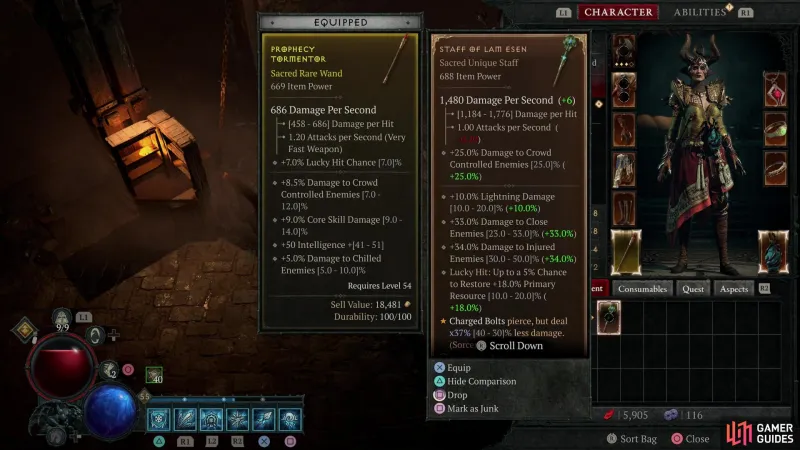
Weapon Upgrade: Your weapon contributes more to damage than any other single piece. Even a modest weapon with better base damage and the right aspects will dramatically improve your performance.
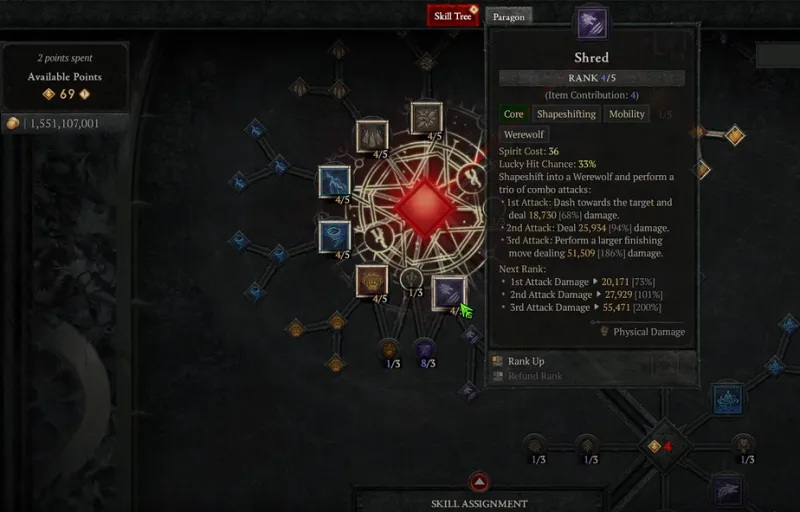
Core Skill Affixes: Identify your build's 2-3 most important damage skills and prioritize gear pieces that boost those specific abilities. A +3 rank to your main skill often outweighs multiple smaller damage increases.
Aspect Optimization: Many casual builds use whatever Legendary aspects they found first. Research which aspects are actually optimal for your build and target-farm or craft replacements.
Tier 2: Multiplier Maximization (High Impact)
Critical Hit Setup: If your build can utilize crit (most can), getting your crit chance to 50%+ and crit damage to 200%+ creates massive damage scaling.
Damage Type Synergy: Make sure your gear's damage bonuses actually match your skills. Fire damage bonuses won't help your Cold skills, no matter how high the numbers are.
Defensive Breakpoints: There are specific thresholds where defense becomes dramatically more effective. Research your class's key defensive stats and hit those breakpoints.
Tier 3: Efficiency Polish (Moderate Impact)
Resource Cost Reduction: Once your damage is solid, reducing resource costs lets you maintain your rotation more consistently.
Cooldown Management: Shorter cooldowns on key abilities smooth out your gameplay and increase overall DPS.
Movement and Utility: Attack speed, movement speed, and crowd control improvements that make the build feel better to play.
Step 3: The Targeted Upgrade Hunt
Now that you know what needs fixing, it's time to hunt down specific improvements. This is where many players waste time and resources by upgrading randomly instead of strategically.
Gear Targeting Strategy
Slot Priority: Weapon first, then armor pieces that can roll your most important affixes. Don't waste time perfecting accessories until your main pieces are solid.
Affix Hunting: Make a list of the 4-5 most important affixes for your build. Focus on gear pieces that can roll 2-3 of those affixes rather than chasing perfect single-stat pieces.
Aspect Planning: Identify which aspects you need and plan your imprinting strategy. Some aspects are rare enough that you should save them for your best gear pieces.
Paragon Optimization
Your Paragon allocation probably needs work. Most casual builds spread points around randomly instead of focusing on synergistic bonuses.
Board Pathing: Research optimal pathing for your build type. The route through Paragon boards matters as much as the destination.
Glyph Priorities: Focus on leveling the 3-4 most impactful glyphs for your build rather than spreading experience across many mediocre ones.
Threshold Planning: Many Paragon bonuses have breakpoints where they become significantly more effective. Plan your point allocation to hit these thresholds.
Step 4: The Gradual Transition
Don't try to transform your build overnight. Make incremental improvements that let you tackle slightly harder content, which in turn provides better rewards for the next round of upgrades.
Phase 1: Quick Wins (1-2 Days)
- Replace your worst gear pieces
- Reallocate obviously misplaced Paragon points
- Swap in better aspects on existing gear
Phase 2: Core Improvements (1-2 Weeks)
- Farm targeted upgrades for key slots
- Level priority glyphs
- Optimize skill rotations and positioning
Phase 3: Fine-Tuning (Ongoing)
- Chase perfect affix combinations
- Min-max Paragon allocations
- Master advanced techniques and combos
Common Pitfalls to Avoid
The Shiny Object Trap: Don't get distracted by gear that looks impressive but doesn't actually help your build. A perfectly rolled item that doesn't synergize with your skills is worthless.
The Perfection Paralysis: You don't need perfect gear to push into serious endgame content. Good enough gear with proper synergy beats perfect gear with poor synergy every time.
The Resource Drain: Don't blow all your crafting materials on minor upgrades. Save premium resources for meaningful improvements.
Measuring Success
Track your progress with concrete metrics:
- Pit tier improvements
- Clear time reductions
- Survivability in challenging content
- Resource efficiency during extended fights
If you're not seeing improvement after targeting specific upgrades, reassess your priorities rather than grinding harder.
The Mindset Shift
The biggest difference between casual and endgame players isn't gear quality—it's understanding why specific choices matter. Start thinking about your character as a system where each piece needs to work together rather than a collection of individual upgrades.
With this systematic approach, most builds can jump from struggling with mid-tier content to confidently tackling Pit 70+ within a couple of weeks. The key is working smarter, not harder, and focusing your limited time on upgrades that actually move the needle.
Your current character has more potential than you think. Sometimes all it takes is the right roadmap to unlock it.