Stop Copying Streamers' Paragon Boards: Here's Why It's Killing Your Build
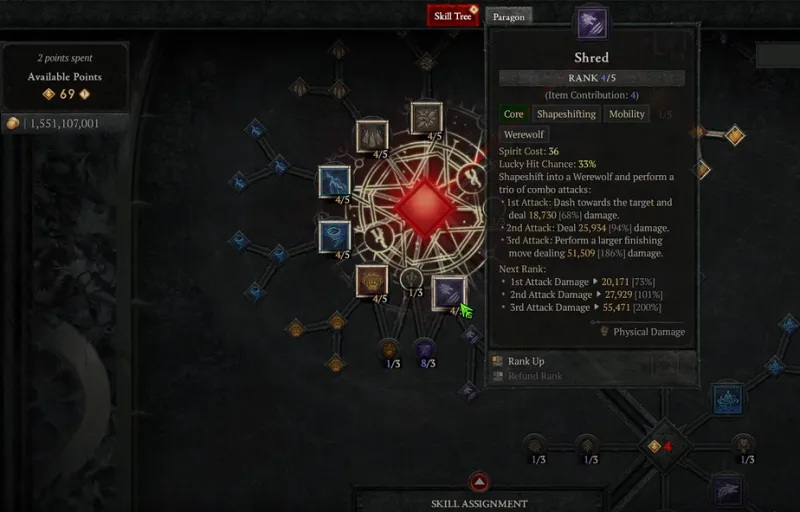
Photo: Diablo 4 character skill tree progression screen glowing nodes dark fantasy, via files.mmopixel.com
Stop Copying Streamers' Paragon Boards: Here's Why It's Killing Your Build
You found the build. You watched the video three times. You screenshotted the Paragon board, replicated every node path down to the last Magic cluster, and now you're staring at your character wondering why it feels like you're hitting enemies with a wet paper bag.
Sound familiar? You're not alone — and it's not your fault. The problem isn't the build. The problem is that Paragon boards don't exist in a vacuum, and the setup a streamer runs at 925 item power with perfect Greater Affixes is a completely different machine than what you're running at 900 with mid-tier rolls. Copying boards wholesale is one of the most common — and most damaging — mistakes players make heading into endgame.
Let's break down why, and more importantly, how to fix it.
Why Streamer Boards Look Nothing Like Your Reality
Top-tier content creators are operating at the absolute ceiling of what Season 7 allows. Their gear has rolled max values on every relevant affix, their Masterworking is capped, and their Tempering results are essentially lottery wins that most players will never see. When a streamer dumps 40 Paragon points into nodes that scale off Critical Strike Damage, those nodes are pulling serious weight because their gear is already pushing Critical Strike Chance to near 100%.
On your character? You might be sitting at 55% Crit Chance. Those same Critical Strike Damage nodes are now performing at maybe 60% of their theoretical maximum. You've essentially wasted a significant portion of your Paragon budget chasing a multiplier that has nothing to multiply.
This is the gear threshold problem, and it's the root cause of most Paragon frustration.
The Three Gear Thresholds You Need to Know
Before you place a single Paragon point, you need to honestly assess where your character sits on the gear progression ladder. Think of it in three rough stages:
Stage 1 — Building the Foundation (Item Power 850–890) At this stage, raw stat nodes — Strength, Intelligence, Willpower, Dexterity depending on your class — deliver more consistent value than most conditional multipliers. Legendary nodes that require specific skill interactions to fire are also risky here because your build's synergies aren't fully online yet. Prioritize flat damage bonuses and survivability clusters. Don't chase Glyph socket boards just because a streamer has four Rare Glyphs leveled to 21.
Stage 2 — Synergy Activation (Item Power 890–915) This is where conditional Paragon nodes start to earn their keep. You've got your key Aspects locked in, your Crit Chance is approaching the 60–70% range, and your skill rotations are consistent. Now you can start routing toward nodes that scale off specific mechanics — Overpower, Lucky Hit, Vulnerable — because you're actually triggering those mechanics reliably.
Stage 3 — Optimization Mode (Item Power 915–925+, Masterworked gear) Only here should you be seriously mimicking a streamer's board layout. At this stage, diminishing returns on flat stats mean that multiplicative nodes and conditional damage bonuses genuinely outperform everything else. This is the world the streamer lives in permanently. You're visiting.
How to Actually Read a Paragon Board
When you look at someone else's Paragon screenshot, train yourself to ask three questions before copying anything:
1. What affix on their gear is this node feeding off? If a node amplifies Vulnerable damage and the streamer's weapon has a Greater Affix for Vulnerable damage, that node is part of a feedback loop you might not have. Check your own gear first.
2. Is this node gated behind a Glyph that I have leveled? Glyphs are the real engine of Paragon boards, and a Rare Glyph at level 21 versus level 1 is almost a different skill. If a streamer's board only makes sense because their Glyph is maxed, note that — and plan your dungeon runs accordingly before routing to that board.
3. Could I reach a different board's socket faster and get similar value? The routing between boards is where players leave the most value on the table. Sometimes the "correct" path to a Legendary node costs 10 more points than an alternate route to a slightly worse node that's still a massive upgrade for your current gear. Do the math on your own character, not theirs.
A Practical Framework for Adapting Any Build
Here's a quick decision process you can run every time you're unsure about a Paragon choice:
- Identify your build's primary damage type (Physical, Fire, Shadow, etc.) and make sure at least one board is maximizing that damage type's flat bonuses before chasing multipliers.
- Map your Crit Chance and Vulnerable uptime before investing in nodes that scale those stats. If you're below 50% Crit Chance, more Crit Damage is low priority.
- Treat Glyph leveling as part of your Paragon plan, not an afterthought. A leveled Glyph in the right socket can outperform three adjacent Magic nodes combined.
- Compare your board path to the streamer's at every major junction. If their path costs 8 points and yours costs 5 to reach the same Legendary node, take your path — those 3 saved points can unlock another socket.
The Honest Truth About Build Copying
Streamers aren't hiding anything from you. The builds they post are real, and the Paragon boards work exactly as advertised — on their characters, with their gear. The content creator ecosystem in Diablo 4 is genuinely helpful, and there's nothing wrong with using those builds as a blueprint.
The mistake is treating a blueprint like a finished house. A blueprint shows you the structure. You still have to build it with the materials you actually have.
Once you start adapting Paragon choices to your real stat profile instead of someone else's ideal one, you'll notice the difference immediately. Damage windows open up. Survivability improves. The build starts clicking in a way that raw copy-paste never quite delivers.
That's not a coincidence. That's your character, finally optimized for your character.