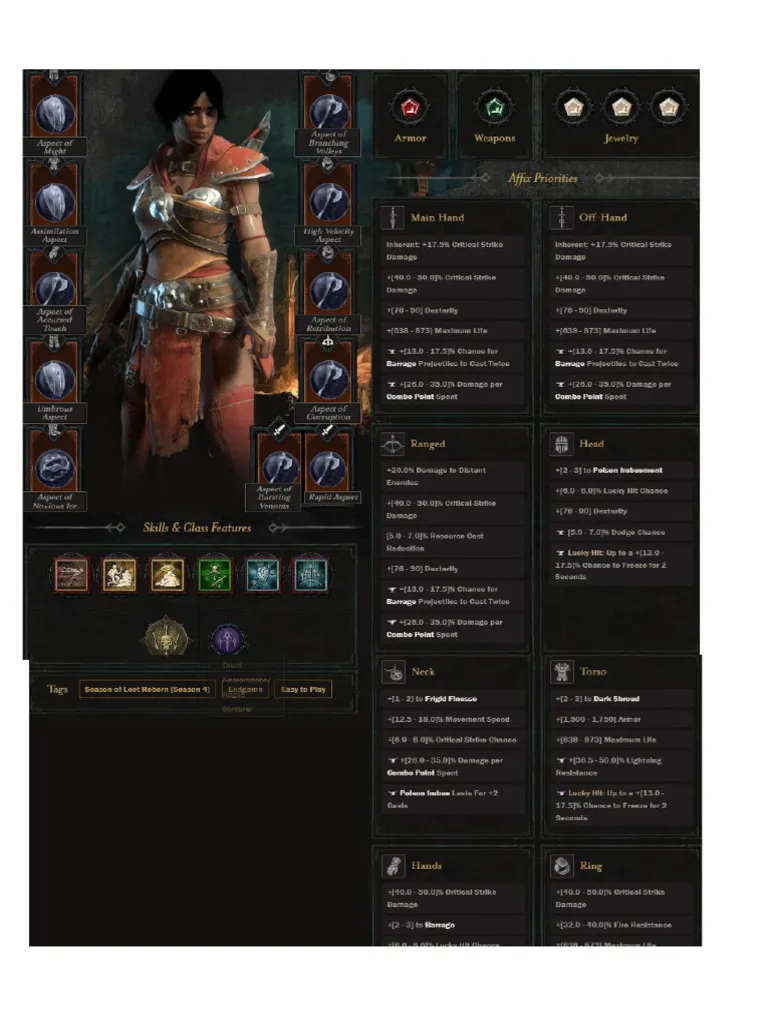
How a Meta Build Is Born: The Wild, Chaotic, Surprisingly Scientific Process Behind Every Season 7 Tier List
Somewhere right now, there's a Diablo 4 player in a Discord server at 2 a.m. typing something like: "wait, if you stack this affix with that passive and proc the interaction on the third hit, the multiplier is actually insane." Three people respond. One says it's bugged and will get patched. Another asks for a video. The third quietly opens the game to test it themselves.
Six weeks later, that interaction is the most-played build in Season 7.
That's not an exaggeration. That's basically how it works. The process by which the Diablo 4 community discovers, validates, and ultimately crowns a meta build every season is one of the most genuinely fascinating examples of collective intelligence in modern gaming—and understanding it can give you a real edge before the tier lists catch up.
Phase 1: The PTR Is a Chaos Laboratory
Every season starts with the Public Test Realm, and the PTR is exactly as messy as it sounds. Blizzard drops patch notes and a preview build, and within hours the community is dissecting every line of text like it's a federal document.
The early PTR phase is dominated by two groups: damage calculators and interaction hunters. Damage calculators are the spreadsheet people—the ones who are already building formulas in Google Sheets before the servers are even live. They're running theoretical DPS numbers on every skill, every passive, every affix combination they can think of. Interaction hunters are doing something different. They're not optimizing—they're looking for surprises. Bugs, unintended synergies, mechanics that behave differently than the tooltip suggests.
Both groups are essential. The calculators establish the baseline—what should be strong based on raw numbers. The interaction hunters find the outliers—what's actually broken in ways nobody predicted.
In Season 7, this dynamic played out clearly in the early days of Spiritborn theorycrafting. The calculators initially ranked the class as mid-tier based on base skill values. The interaction hunters found the Resolve stacking mechanic and the way certain Guardian bonuses multiplied together in ways the patch notes didn't make obvious. The calculators updated their sheets. The tier lists shifted.
Phase 2: Streamers Are the Proving Ground
Once the season goes live, the second phase kicks in: streamer experimentation. This is where theory meets reality, and a lot of PTR predictions die here.
Top Diablo 4 streamers—many of whom have dedicated testing setups and play 12+ hours a day in the first week of a season—are essentially running a distributed beta test on live content. They're not just playing builds; they're stress-testing them. Can this Bone Spear variant actually sustain in Pit 80? Does the Whirlwind CDR loop hold up against elite affixes that weren't in the PTR?
The streamer phase is also where narrative builds emerge. These are builds that aren't necessarily the highest DPS but are visually spectacular or conceptually interesting enough to capture audience attention. The Werewolf-Hurricane hybrid from earlier in Season 7 is a perfect example—the interaction between storm procs and shapeshift bonuses was mechanically interesting, visually chaotic, and compelling to watch. Streamers ran it because their audiences loved it. And because streamers ran it, thousands of players tried it, generating a massive real-world dataset on viability.
Some narrative builds flame out. They're fun to watch but genuinely underperform at depth. Others turn out to be legitimately strong—the audience pressure to play them created the testing volume needed to reveal their actual ceiling.
Phase 3: Reddit Does the Math (Again)
About two weeks into a season, something reliable happens: Reddit gets serious. The initial hype posts give way to data posts. Someone publishes a Pit clear compilation comparing 15 different builds at Pit 90. Someone else posts a resistance calculator spreadsheet that gets 3,000 upvotes. A third person writes a 4,000-word breakdown of why the Paragon board for a specific build is being run incorrectly by 90% of the community.
This is the community's peer review phase, and it's surprisingly rigorous. Bad math gets called out fast. Anecdotal evidence gets challenged. Build creators who can't defend their numbers in the comments don't survive the thread. The builds that emerge from this gauntlet with their reputation intact are usually the real ones.
The Reddit phase also produces something valuable for casual players: consensus documentation. By the time a build has survived two weeks of Reddit scrutiny, someone has written a clean guide for it. The barrier to entry drops. The build goes mainstream.
Phase 4: The Tier List Crystallization
Tier lists are the end of the process, not the beginning—even though most players treat them like gospel from day one. By the time a tier list is published on a major site or YouTube channel, the community has already done 3–4 weeks of live testing. The tier list is a summary, not a discovery.
This matters because tier lists are always slightly behind reality. They reflect the consensus of the previous two weeks, not the current state of the game. A build that just got quietly buffed in a mid-season patch might still be sitting at A-tier on a list that hasn't updated yet. A build that got nerfed yesterday might still be sitting at S-tier.
The players who understand this—who read tier lists as historical documents rather than current truth—are the ones who spot the next meta before it gets documented.
How to Spot the Next Meta Before Everyone Else
Here's the practical takeaway from all of this. If you want to be ahead of the curve rather than following it, watch for these signals:
1. Interaction hunters going quiet. When the people who are normally loud about debunking overhyped builds suddenly stop arguing against something, it usually means they've tested it and the numbers are real.
2. Streamer build diversity collapsing. When five streamers who normally play completely different things all independently land on the same build in the same week, that's not coincidence. That's the market finding the right answer.
3. Reddit threads getting defensive. When a build's community starts aggressively defending it against criticism rather than engaging with it, it usually means the build is either genuinely broken (and people are trying to protect it from nerfs) or about to be nerfed (and people know it).
4. Patch note buried buffs. Blizzard's patch notes are long, and players skim them. A 15% buff to a passive that feeds a specific interaction can be the seed of an entire meta shift—and it often sits in the notes for a week before anyone notices.
The Community Is the Build
What makes Diablo 4's meta discovery process remarkable isn't any single player or streamer or spreadsheet. It's the system—the way thousands of players with different skills and different goals collectively converge on the truth faster than any individual could.
The PTR theorycrafters, the interaction hunters, the streamers, the Reddit mathematicians, the tier list compilers—they're all running parallel experiments, and the meta that emerges from that process is genuinely more reliable than anything a single expert could produce alone.
So the next time you see someone in a Discord server at 2 a.m. talking about a weird interaction nobody's tried yet? Maybe open the game and test it yourself. You might be looking at the next season's S-tier build—six weeks before the tier list catches up.