Same Boss, Five Builds: What Happens When Every Class Fights the Exact Same Encounter
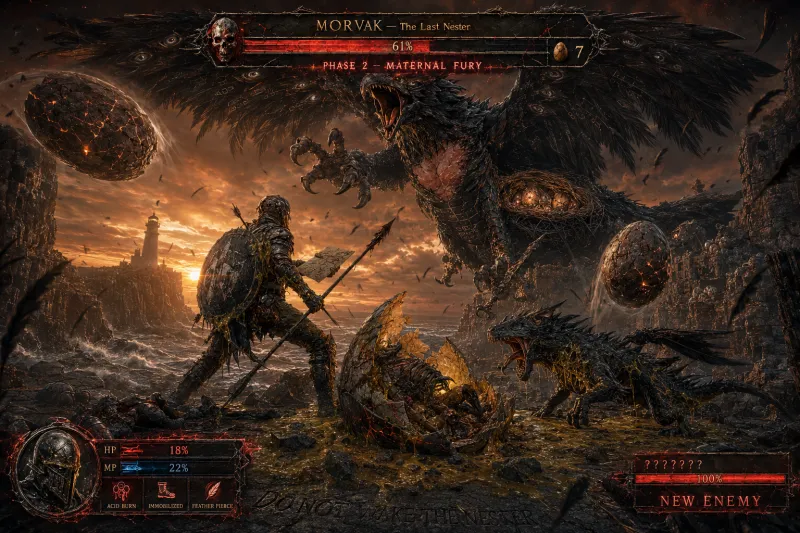
Photo: dark fantasy video game boss fight screenshot dramatic lighting, via cdn.budgetpixel.com
Tier lists tell you what's strong. They don't tell you why. So we ran an experiment: five classes, five builds, identical gear scores, one brutal endgame encounter. Same boss, same affixes, same pit tier. The only variable was the class.
The Ground Rules
Every build was geared to the same power level — comparable legendary aspects, no Mythics, paragon boards within a few points of each other. We picked a boss with a mechanic-heavy phase: a telegraphed ground slam, a debuff that stacks if you stand in it, and a tight enrage timer that punishes passive play.
We logged three things per run: total clear time, deaths, and how long the boss spent in its stagger window.
The Rankings, Honestly
1. Barbarian — Raw stats carry the day. Our Whirlwind setup didn't outplay the mechanics; it simply ignored them. Two deaths, but the enrage timer was never a threat.
2. Sorcerer — Teleport turns the hardest mechanic into a non-issue. Our Sorcerer dodged the ground slam by accident, mid-cast. Skill expression, but the kind that's baked into the kit.
3. Necromancer — The Minion build treated the fight like a raid boss it could outsource. The corpse explosion loop kept damage uptime high even while dodging, but the debuff phase got dicey when minions died and the board reset.
4. Rogue — Highest skill ceiling in the group. Our Dash setup cleared faster than the Barbarian on a good run and died three times on a bad one. The fight rewards Rogue players who know the boss timer; it punishes everyone else.
5. Druid — The honest struggler. Our Stormclaw setup had the damage, but the shapeshift animation locks made the dodge phase feel clunky. Best stagger uptime of the group, worst death count.
What the Damage Phases Revealed
The Barbarian and Necromancer had flat damage graphs — steady pressure, no spikes. The Rogue's chart looked like a mountain range: massive bursts, long valleys. That's the difference between stat-reliant and mechanic-reliant design, and it explains why tier lists flip every patch.
The Takeaway
If your class ranks low here, it doesn't mean your build is bad. It means your build has to earn its clears. That's not a flaw — it's just a different game.