Beyond the Tier List: Which Season 7 Builds Actually Feel Like a Different Game
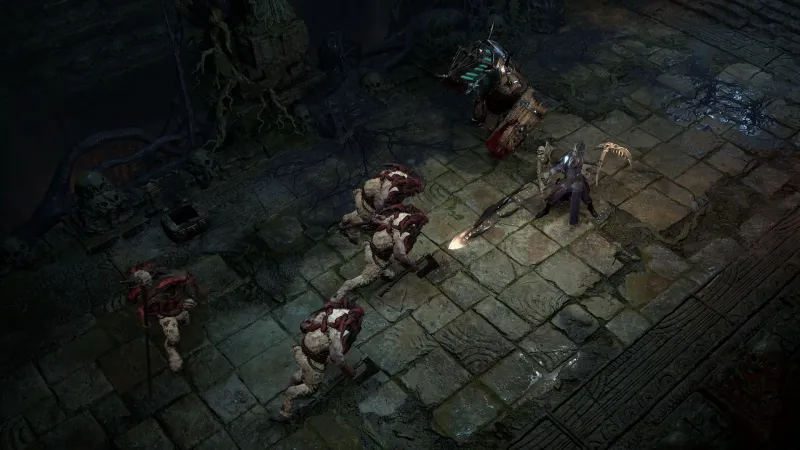
Photo: Diablo 4 different character classes side by side combat comparison, via static0.gamerantimages.com
Every season, the tier list drops and half the playerbase immediately copies the S-tier pick. A month later, Reddit is flooded with posts from burned-out players who can't figure out why they're not having fun. The answer is almost always the same: they optimized for efficiency and forgot to ask whether they actually enjoy the way the build plays.
This isn't an anti-meta argument. Meta builds are meta for a reason, and if Pit 100 is your goal, you probably want to be in that conversation. But there's a massive difference between 'this build is powerful' and 'this build feels like nothing else in the game.' Season 7 actually has more mechanical variety than most players realize—if you know where to look.
The Playstyle Spectrum: How We're Evaluating This
Forget damage numbers for a second. We're judging builds on four axes:
- Input complexity — How many decisions per second does the build demand?
- Visual and audio feedback — Does the combat feel visceral and responsive, or sterile?
- Resource management depth — Is there a real economy to manage, or is it a single-button loop?
- Reactive vs. proactive gameplay — Does the build punish mistakes in interesting ways, or just kill things before it matters?
With that lens, here's the honest breakdown.
Necromancer: The Widest Range, the Sharpest Divide
Necromancer is arguably Season 7's most internally diverse class—but only if you're willing to leave the Bone Spear meta behind. Bone Spear itself is a precision-timing build with real skill expression in Essence management and positioning. It rewards good play in ways most builds don't.
But the Minion Necromancer? That's a completely different psychological experience. You're a general, not a fighter. Combat is about positioning your army, triggering command abilities at the right moment, and watching enemies dissolve from the outside. Some players find this empowering. Others find it passive to the point of boredom.
Summoner vs. direct damage Necromancer isn't just a stat difference—it's two fundamentally different games wearing the same class skin. That's genuinely rare in Diablo 4 and worth acknowledging.
Barbarian: The Loudest Build in the Room
Barbarian has a reputation for being the brute-force option, and honestly, that's not entirely wrong. But the Arsenal system—the ability to assign different weapons to different skills—adds a layer of build crafting that no other class has. When you optimize your weapon assignments correctly, Barbarian rotations have a satisfying mechanical logic that goes deeper than it looks.
The problem is that most Barbarian builds in Season 7 converge on the same shout-based loop. Shout, hit, shout again, repeat. It's effective and it feels powerful because the screen explodes constantly. But if you've played one Barbarian build deeply, you've largely experienced the class's moment-to-moment gameplay.
The exception: Earthquake Barbarian plays surprisingly differently from the shout meta, with a slower, more deliberate rhythm built around setup and payoff. It's the Barbarian build most likely to genuinely surprise you.
Druid: High Ceiling, High Commitment
Druid might be Season 7's most misunderstood class. On the surface, it looks like a shapeshifter fantasy—and it is—but the real depth comes from Spirit management and the interplay between human form, Werebear, and Werewolf transformations.
Well-played Druid is genuinely one of the most input-demanding experiences in the game. You're constantly making decisions about when to transform, which Spirit to spend, and how to position for maximum crowd control. It rewards players who think a few seconds ahead.
The weakness: Druid's skill expression is largely invisible. The build looks chaotic from the outside and doesn't have the same visual punch as a Sorcerer or Necromancer. If you need your build to look impressive as well as play well, Druid might frustrate you.
Sorcerer: The Most Distinct Subclass Identity
Here's the honest truth: Sorcerer has the most mechanically distinct subbuilds of any class in Season 7. A Fire Sorcerer, an Ice Sorcerer, and a Lightning Sorcerer don't just use different skills—they play on fundamentally different timelines.
Fire builds are about setup and detonation. You're applying conditions, stacking modifiers, and unleashing burst windows. Ice builds are control-first—you're managing frozen states, shatter timing, and defensive positioning simultaneously. Lightning builds are pure aggression, rewarding players who can maintain offensive pressure without dying.
If you want the most 'different game' experience within a single class, roll three Sorcerers. You'll barely recognize the third one from the first.
Rogue: Slick but Narrow
Rogue is Season 7's style points champion. The movement, the animation quality, the way abilities chain together—no class looks cooler in action. But underneath the aesthetic, most Rogue builds operate on a fairly tight combo loop that doesn't deviate much regardless of which skill you're emphasizing.
Twisting Blades and Flurry feel meaningfully different in the leveling phase. By endgame, both builds have largely converged on the same fundamental rhythm: generate, spend, use Imbuement on cooldown, reposition. The execution ceiling is real, but the strategic variety is limited compared to Druid or Sorcerer.
That said, Rogue is the best class in the game for players who want to feel mechanically skilled. If input precision matters more to you than strategic variety, Rogue is your answer.
The Verdict: Which Builds Offer True Variety
If you're chasing genuinely distinct playstyle experiences in Season 7, here's the honest ranking:
Highest variety: Sorcerer (three distinct elemental identities), Necromancer (summoner vs. direct damage divide)
Moderate variety: Druid (high depth, lower visual payoff), Barbarian (Arsenal system adds build crafting, but gameplay converges)
Lowest variety: Rogue (best execution feel, narrowest strategic range)
The tier list tells you what's strongest. This list tells you what's different. For players who've been burned out by copying meta builds, that second list might be the more useful one.