Squad Goals: How Season 7's Group Meta Rewrites the Solo Playbook
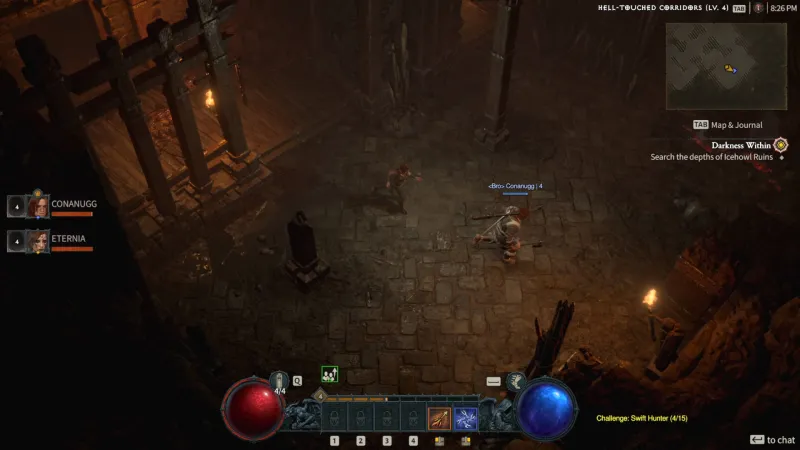
Photo: diablo 4 four player group dungeon combat teamwork coordination, via www.pcgamesn.com
Squad Goals: How Season 7's Group Meta Rewrites the Solo Playbook
Everything you know about Diablo 4's power rankings gets flipped upside down the moment you add three teammates. That Bone Spear Necromancer demolishing solo content? Suddenly mediocre when competing for kills with three other DPS players. Meanwhile, that "weak" support-focused Druid becomes the difference between success and failure in Pit 100+ group pushes.
Group play isn't just solo play with friends—it's an entirely different game with unique strategies, synergies, and tier lists that would shock solo players.
The Fundamental Shift: From Self-Sufficiency to Specialization
Solo builds require complete self-sufficiency. You need damage, defense, crowd control, and resource management all bundled into one character. Group play rewards extreme specialization instead. The best group players abandon self-sufficiency entirely, focusing on doing one thing exceptionally well while relying on teammates for everything else.
This shift creates opportunities for builds that simply don't work alone. Pure support Druids with Hurricane and crowd control can enable three glass cannon DPS players to obliterate content that would be impossible solo. Conversely, many solo powerhouses lose their edge when their unique advantages get diluted across four players.
Enemy scaling compounds these differences. Four-player groups face significantly more monsters with increased health pools, creating scenarios where burst damage becomes less valuable than sustained area-of-effect clearing or enemy control.
The New Class Hierarchy: Group Edition
S-Tier Group Classes:
Spiritborn dominates group play even more than solo content. Their Guardian Spirit mechanics provide party-wide buffs that stack multiplicatively with individual player damage. A well-played Spiritborn can increase total group DPS by 40-50% while maintaining competitive personal damage output.
Druid transforms from a solid solo choice into the ultimate group enabler. Hurricane provides unmatched crowd control for the entire party, while Earth skills offer defensive buffs that keep glass cannon builds alive. The ability to control enemy positioning and provide area denial makes Druid indispensable for serious group pushing.
A-Tier Group Classes:
Barbarian's group utility comes from their tanking potential and party buffs. War Cry and Battle Rage affect all nearby allies, while their natural tankiness allows them to control enemy positioning and absorb damage that would instantly kill other classes. However, their damage output can feel underwhelming compared to pure DPS specialists.
Necromancer remains strong but requires adaptation. Army builds provide excellent area control through minion positioning, while Bone builds offer consistent damage that doesn't rely on competing for kills. Blood builds struggle more in groups due to Life management complications.
B-Tier Group Classes:
Sorcerer faces the biggest adjustment challenge. Their glass cannon nature becomes a liability when they can't control enemy positioning, and their burst damage gets diluted when competing with other DPS players. However, specialized group builds focusing on crowd control or buff support can find success.
Rogue's single-target focus becomes problematic in group content where area damage and enemy control matter more than precise elimination. They excel in specific roles like boss damage or elite elimination but struggle with the trash clearing that dominates most group content.
Party Composition: The Science of Synergy
The optimal four-player composition follows a specific formula: one primary tank/controller, two specialized DPS players, and one hybrid support/DPS. This setup maximizes both survivability and damage output while maintaining the crowd control necessary for higher-tier content.
The Controller Role: Usually filled by Druid or Barbarian, this player manages enemy positioning, provides defensive buffs, and ensures the group can engage safely. They sacrifice personal damage for team utility.
Primary DPS: Spiritborn or optimized Necromancer builds that excel at consistent area damage. These players focus purely on damage output while relying on the controller for positioning and safety.
Secondary DPS: Often a Sorcerer or specialized Rogue build that handles specific threats like elites or bosses. They complement the primary DPS rather than competing directly.
Hybrid Support: A build that provides both damage and utility, often through buffs, debuffs, or resource management. This role requires the most game knowledge and adaptability.
Build Adaptations: Solo Stars vs. Group Players
Successful group builds often look completely different from their solo counterparts. Take Hurricane Druid—solo versions focus on damage scaling and personal survivability. Group versions prioritize crowd control duration, area coverage, and team buff effects instead.
Similarly, group Necromancers often abandon the minion management that defines solo Army builds. Instead, they focus on Corpse Explosion chains and area denial, using their minions primarily for utility rather than damage.
Sorcerers face the most dramatic adaptations. Group versions often become quasi-support characters, using Teleport for team positioning, Ice spells for crowd control, and defensive enchantments for party survivability.
The Resource Economy Revolution
Group play fundamentally changes resource management across all classes. With multiple players generating corpses, essence, and other resources, builds can pursue more aggressive resource expenditure strategies that would be unsustainable solo.
Necromancers benefit most from this shift, as corpse generation scales with group size. Army builds can maintain larger minion counts, while Corpse Explosion builds gain access to consistent fuel for their devastating area damage.
Conversely, some builds struggle with resource competition. Multiple Sorcerers fighting for mana orbs or Barbarians competing for fury generation can create resource scarcity that doesn't exist in solo play.
Communication and Coordination: The Hidden Meta
The best group compositions rely on coordinated skill usage that amplifies individual strengths. Timing Vulnerable application with burst damage windows, coordinating crowd control with positioning abilities, and managing cooldowns across the team creates power levels impossible to achieve solo.
This coordination requirement favors builds with flexible timing and clear communication windows. Abilities with long wind-ups or precise timing requirements become less valuable unless the entire team builds around supporting them.
The Endgame Group Reality
At the highest levels of group content, meta builds focus more on enabling teammates than personal performance. The most valuable players are those who can make their three teammates 25% more effective rather than trying to be the star damage dealer.
This creates a completely different optimization priority. Instead of maximizing personal DPS, group players focus on uptime, positioning, resource sharing, and team synergies. The result is a meta that would be unrecognizable to solo players but produces the highest group performance possible.
Understanding these differences isn't just about playing with friends—it's about recognizing that Diablo 4 contains multiple games within the same framework, each requiring distinct strategies, builds, and mindsets to master.